



What Makes a Hydraulic Fluid Fire-Resistant?
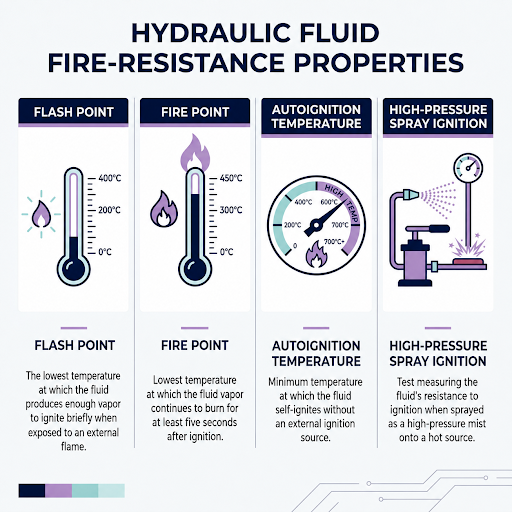
A fire-resistant hydraulic fluid resists ignition and limits flame propagation when sprayed under pressure onto a hot surface or ignition source. This is achieved either through synthetic hydrocarbon chemistry with a high flash and fire point, or through phosphate ester chemistry, which is inherently fire-resistant. Fire-resistant does not mean fireproof.
Hydraulic systems run at high pressure, so a pinhole leak does not drip; it atomises into a fine, easily ignited mist. The whole point of a fire-resistant fluid is to behave differently in that scenario, resisting ignition and refusing to sustain a flame once the ignition source is removed.
It is important to be precise about the language. Fire-resistant is a tested, defined level of performance, not a guarantee of immunity. Under sufficiently extreme conditions these fluids can still burn. The benefit is a much higher threshold for ignition and far slower flame propagation than a conventional mineral fluid offers.