
Quick View
Product Code: 
£
Basket
Skip to main content

AS5780 vs MIL-PRF-23699: Turbine Oil Compliance Breakdown

If you source aviation turbine oils, understanding the difference between AS5780 and MIL-PRF-23699 is critical for compliance, OEM approval, and airworthiness documentation. Both specifications cover 5 cSt synthetic turbine engine oils, but they differ in qualification route, performance classes, and operational application.

This guide breaks down both specifications, compares them class by class, and gives a practical framework for confirming turbine oil compliance the first time, drawing on the documentation issues we see most often in real aerospace procurement.

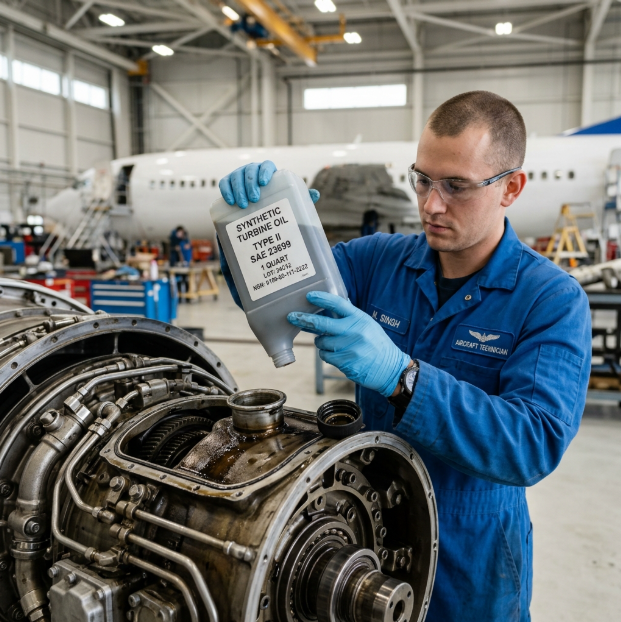
Aircraft technician handling synthetic turbine engine oil during maintenance, illustrating AS5780 and MIL-PRF-23699 compliance in an MRO setting

What Is MIL-PRF-23699?

MIL-PRF-23699 is a US Department of Defence performance specification covering 5 cSt synthetic turbine engine oils used in aircraft engines, transmissions, and accessory gearboxes. It defines performance classes including STD, HTS, and C/I for military and aerospace applications, and carries NATO Code O-156.

Formerly designated MIL-L-23699, the specification covers a synthetic polyol ester oil that must demonstrate strong oxidation stability, thermal resistance, anti-wear performance, and corrosion protection across a wide operating temperature range. It remains one of the most widely referenced turbine engine oil specifications in both military and commercial aviation.

MIL-PRF-23699 is divided into performance classes reflecting differing additive packages and operational requirements:

  • STD (Standard) the baseline class, suitable for general turbine engine use where no enhanced property is specified.
  • HTS (High Thermal Stability) improved high-temperature oxidation resistance for hotter-running engines.
  • C/I (Corrosion Inhibited) enhanced corrosion protection, frequently specified for naval and marine-environment operations.

Because the class affects approval, a product qualified to one class is not automatically acceptable where another is specified. Always confirm the exact class your engine OEM requires.

What Is AS5780?

AS5780 is an SAE International aerospace standard covering 5 cSt synthetic gas turbine engine lubricants, written largely for commercial aviation. It defines two performance classes, SPC (Standard Performance Capability) and HPC (High Performance Capability), and is referenced within many civil engine OEM approved oil lists.

SAE developed AS5780 in part to address the growing divergence between military procurement needs and the demands of modern commercial turbofan engines. It provides a standardised specification recognised by civil engine manufacturers, with requirements aligned to commercial fleet operation rather than defence procurement.

The two classes map broadly to their MIL-PRF-23699 counterparts:

  • SPC (Standard Performance Capability) broadly comparable in intent to the MIL-PRF-23699 STD class.
  • HPC (High Performance Capability) higher thermal and oxidative performance, aligned in purpose with the HTS class.

AS5780 vs MIL-PRF-23699 at a Glance

MIL-PRF-23699 AS5780
Issuing bodyUS Department of DefenceSAE International
Primary sectorMilitary & defence aviationCommercial aviation
Oil type5 cSt synthetic polyol ester5 cSt synthetic polyol ester
Performance classesSTD, HTS, C/ISPC, HPC
NATO CodeO-156Not assigned
QualificationQPL / approved product testingOEM and SAE-aligned approval
Typical reference pointDoD platforms, military enginesCivil engine OEM approved lists

How the Classes Compare

The most common source of confusion is mapping classes between the two systems. They are broadly analogous but not interchangeable, and equivalence should never be assumed without confirmation.

MIL-PRF-23699 class AS5780 counterpartNotes
STDSPCBaseline performance; broadly aligned in intent.
HTSHPCHigher thermal stability; aligned, but confirm on COC.
C/INo direct equivalentCorrosion-inhibited; military/naval focus.
A single oil product is often qualified to both specifications at once. An oil approved to MIL-PRF-23699 HTS may also be listed against AS5780 HPC, in which case the certificate of conformance will reference both approvals. Dual qualification is not universal, so the documentation must always be checked rather than assumed.

OEM Approval: Where the Real Decision Sits

Meeting a specification is necessary but not sufficient. The final authority is the engine OEM's approved oil list, documented in the aircraft maintenance manual (AMM) or component maintenance manual (CMM). Modern high-bypass turbofan engines operating at elevated temperatures often specify higher thermal stability classes aligned with AS5780 HPC or MIL-PRF-23699 HTS approvals.

In practice, that means checking the named approval for your specific engine. Manufacturers such as Pratt & Whitney, Rolls-Royce, GE Aerospace, Safran, and Honeywell each maintain their own approved lubricant lists, and a given oil may hold approval against some engine families but not others, even where the underlying specification and class match. Naval aviation programmes add a further layer, frequently calling up the corrosion-inhibited (C/I) class for salt-environment operation.

OEM Approval Flow

Specification  →  Class  →  OEM Approval  →  CoC Verification

Common Procurement Mistakes We See

Across military, airline, and MRO lubricant procurement, the same avoidable errors come up repeatedly. The most frequent:

  • Assuming HTS and HPC are interchangeable. Buyers often assume MIL-PRF-23699 HTS automatically satisfies all AS5780 HPC approvals. In practice, OEM approval status must still be confirmed against the engine maintenance manual and current approved oil list.
  • Ordering by legacy specification only. Quoting MIL-L-23699 or an outdated revision instead of the current MIL-PRF-23699 class can cause acceptance issues at goods-in.
  • Overlooking the OEM approved oil list. Relying on the specification alone, without confirming the named engine approval.
  • Incorrect certificate of conformance wording. A CoC that omits the class, revision, or qualification reference is a common reason for documentation rejection.
  • Missing batch traceability. No clear chain from manufacturer batch to point of dispatch, which Part 145 audits will flag.
Why Incorrect Turbine Oil Selection Matters

Specifying the wrong oil, or the wrong class, is not just a paperwork problem. The operational and commercial consequences are significant:

  • Accelerated deposit formation and coking in hot sections.
  • Increased bearing wear and reduced component life.
  • Seal degradation and elastomer compatibility issues.
  • Rejected maintenance audits under EASA or FAA Part 145.
  • Warranty exposure where non-approved oil has been used.
  • Fleet downtime while compliant stock and documentation are sourced.

Getting the specification and class right at the point of order is the cheapest insurance against all of the above.

Quick Compliance Checklist

Before ordering turbine oil, confirm:
  1. Engine OEM approval against the current approved oil list (AMM/CMM).
  2. Specification and revision (e.g. MIL-PRF-23699G, AS5780C).
  3. Performance class (STD / HTS / C/I, or SPC / HPC).
  4. Certificate of conformance wording references specification, class, revision, and qualification status.
  5. Batch traceability from manufacturer to point of dispatch.
  6. Shelf life meets your storage and usage window.
Qualification status should always be verified against the applicable Qualified Products List (QPL) and current OEM-approved lubricant documentation.

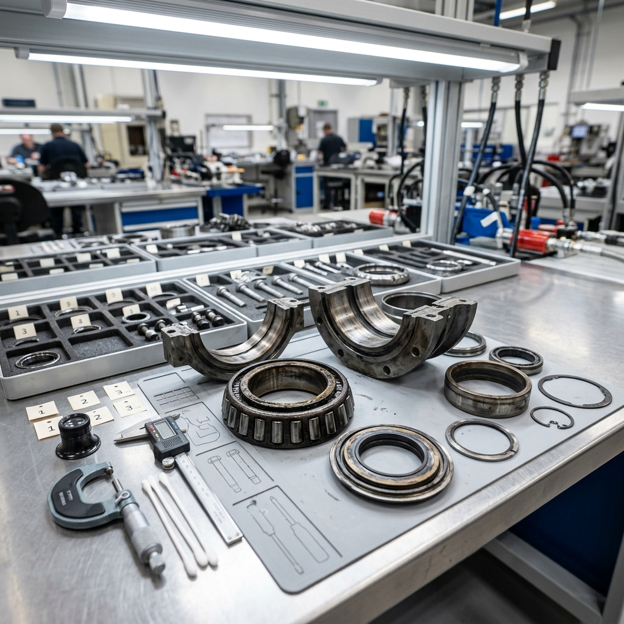
Worn turbine engine bearing and seal components showing deposit formation, illustrating the consequences of incorrect turbine oil selection

Why the Difference Matters for Procurement

  1. Customer and OEM requirements drive the choice. Military platforms and DoD-contracted engines typically call up a MIL-PRF-23699 class. Commercial engine OEMs increasingly reference AS5780 within their approved oil lists. The correct specification is determined by what the maintenance manual or OEM approval requires, not by which is more familiar.
  2. The class is as important as the specification. Supplying a STD-class oil where HTS is required, or an SPC product where HPC is specified, can render the material non-compliant even though the base specification matches.
  3. Documentation and traceability differ. MIL-PRF-23699 products typically reference QPL status and class on the certificate of conformance. AS5780-referenced products rely on OEM-aligned approval evidence. Facilities operating under EASA or FAA Part 145 approvals carry further documentation requirements on top.

Related Aerospace Specifications

Turbine oil specifications are closely connected to broader aerospace lubricant standards, OEM approval systems, and military qualification frameworks, making it important to understand the related references that influence compliance, traceability, and engine compatibility.

How Silmid Supports Turbine Oil Compliance

Silmid stocks turbine engine oils from leading aerospace lubricant manufacturers, supplied with the documentation aerospace buyers and MRO facilities depend on. Our technical team can provide:

  • Certificates of conformance referencing the correct specification, class, revision, and qualification status.
  • Shelf life documentation for time-limited products.
  • Batch traceability from manufacturer to point of dispatch.
  • Product consultation, sourcing support, and repacking services for specific operational needs.

Whether you are sourcing for a military depot programme, an airline line-maintenance operation, or a general aviation MRO facility, getting the specification and class right at the point of order is the fastest way to avoid rejected materials, documentation delays, and airworthiness risk.

Getting It Right Before You Order

AS5780 and MIL-PRF-23699 cover comparable 5 cSt synthetic turbine engine oils but serve different sectors and qualification routes. MIL-PRF-23699 is DoD-governed, NATO-coded (O-156), and classed STD, HTS, and C/I for military and defence aviation. AS5780 is SAE-issued, oriented toward commercial aviation, and classed SPC and HPC.

Many oils are dual-qualified, but the classes are not automatically interchangeable, and the C/I class has no direct AS5780 counterpart. Confirm both the specification and the class against your engine OEM's approved oil list, and verify the certificate of conformance, before you order.

For specification cross-references, class confirmation, or sourcing support, contact the Silmid technical team.

Frequently Asked Questions

Can AS5780 replace MIL-PRF-23699?

Not automatically. Although both cover 5 cSt synthetic turbine oils and many products hold both approvals, the specifications and their classes are not interchangeable. Confirm the exact specification and class required by your engine OEM and approved oil list before substituting one for the other.

What does HTS mean in turbine oil?

HTS stands for High Thermal Stability, a performance class within MIL-PRF-23699. It offers improved high-temperature oxidation resistance for hotter-running engines and aligns in intent with the AS5780 HPC class, though equivalence must be confirmed on the certificate of conformance.

What is NATO Code O-156?

NATO Code O-156 is the standardised NATO designation for the 5 cSt synthetic turbine engine oil covered by MIL-PRF-23699. NATO codes allow member nations and militaries to identify functionally equivalent lubricants regardless of commercial brand.

What turbine oil do commercial jet engines use?

Most modern commercial jet engines use 5 cSt synthetic ester turbine oils qualified to AS5780 (SPC or HPC) and frequently MIL-PRF-23699 as well. The exact oil and class are dictated by the engine OEM's approved oil list rather than the specification alone.

Is AS5780 the same as MIL-PRF-23699?

No. They are separate specifications covering similar oils. MIL-PRF-23699 is issued by the US Department of Defence; AS5780 is an SAE International standard oriented toward commercial aviation. Many oils are qualified to both, but they are not automatically interchangeable.

Select Category