Quick View
Product Code: 
£
Basket
Skip to main content

AeroShell Aircraft Engine Oil for Summer Flying

Flying season is on the horizon, and as you prepare to start your engines for a summer in the skies, you can fly further with AeroShell’s comprehensive range of piston engine oils, trusted all around the world to protect engines whilst in the air and on the ground.

How AeroShell Aircraft Engine Oil Protects in the Heat of Summer

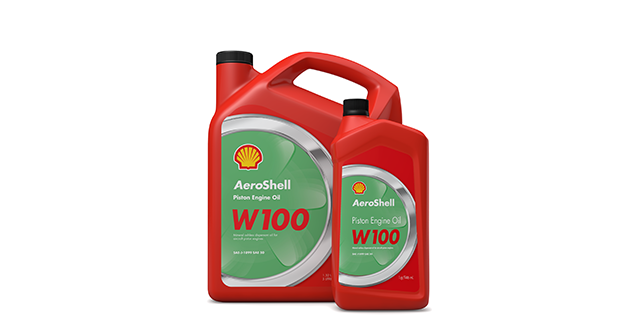
Summer flying can increase the importance of oil selection because aircraft engines may see more frequent use, warmer conditions, and longer periods exposed to humidity between flights. The single grade heritage of AeroShell W100 Plus means outstanding protection especially in the humid summer months, which exposes your engine to higher risk of rust formation. The added anti-corrosion additive provides enhanced protection to your engine to prevent rust.

AeroShell W100 Plus contains enhanced anti-wear additives to protect your engine especially when your aircraft is clocking more miles during flying season.

The ashless dispersant additives in AeroShell Oil W100 Plus are designed to stop dirt particles from joining to form harmful sludge deposits. These combined with extra anti-corrosion and anti-wear additives offer better protection and therefore prolong the life of your engine.

AeroShell piston engine oil

Looking for the Right AeroShell Aircraft Engine Oil This Summer?

helicopter at sunset

Additional Maintenance Tip: For optimal performance, it’s recommended to change your AeroShell aircraft engine oil every 25–50 flight hours, depending on usage conditions and engine type. If switching between oil grades (e.g., from W100 to W15W50), check manufacturer guidance to ensure compatibility. Regular oil analysis and filter inspections also help detect early signs of wear. Before busier summer flying periods, confirm the selected AeroShell oil grade against the aircraft maintenance manual and review oil condition, filters, and recent usage patterns as part of routine preparation.

AeroShell’s trusted portfolio of piston engine oils offers peace of mind to aircraft owners, flight schools, and pilots through the summer months. This includes AeroShell aircraft engine oil, designed to perform in all flying conditions.

Whether it’s in flight or on the ground, all AeroShell oils — including AeroShell aircraft engine oil — are formulated to ensure full engine protection year-round. The range includes AeroShell W100 Plus, along with AeroShell W15W50, AeroShell W120 & AeroShell W100, — each offering unique benefits. For instance, AeroShell W80 is ideal for cooler climates, AeroShell W100 provides balanced performance for general conditions, and AeroShell W120 is optimised for hotter environments. All these AeroShell piston engine oil variants use ashless dispersant technology for cleaner engine operation.

How to Compare AeroShell Oils for Summer Use

Compare AeroShell piston engine oils by aircraft and engine guidance, expected operating temperature, storage conditions, and whether the aircraft needs straight-grade or multigrade oil. Users considering AeroShell W15W50 can also review Silmid’s AeroShell W 15W-50 guide for more detail on that product option.

With AeroShell’s experience spanning over a century and overcoming various aviation challenges, you can be sure you’re getting the best protection available with their SAE fully approved oils.

Tips for preparing your aircraft after winter storage

As the covers come off, it is important to ensure all aspects of your aircraft are in perfect condition before your first flight. These simple tips may help in ensuring your first flight is a safe one.

  • Ensure the battery is in good condition and fully charged, ideally using a slow “trickle” charger.
  • Check the fuel for water. The best time to do this is first thing in the morning before the aircraft is moved.
  • Conduct a full walk around of the aircraft, checking the brakes as well as exhausts and inlets for signs of obstruction.
  • Check the engine, turning it over on the starter motor with the fuel, magnetos and mixture lever turned off. This will allow oil around the engine ahead of a brief ground run.
  • Drain the preservative oil and change the filters, before refilling with the operating oil of choice.
  • Check lubrication points across the airframe, including joints and linkages and replace with new grease where necessary.
  • Check the Perspex of the cockpit canopy for scratches or other marks that should then be removed with specialist polishing kits.
  • Ensure full and thorough pre-flight checks are completed. Returning an aircraft to an operational state should always be carried out by trained operatives in conjunction with the aircraft maintenance manual and any other important documentation.
plane over sea

Frequently Asked Questions About AeroShell Aircraft Engine Oil

What’s the shelf life of AeroShell aircraft engine oil?

Unopened containers typically last up to 5 years when stored in cool, dry conditions. Once opened, it’s best to use the oil within 12 months.

Is AeroShell W 15W-50 safe for long-term storage?

Yes, it contains synthetic and anti-corrosion additives suitable for engine preservation — but AeroShell offers dedicated preservation oils for long downtimes.

Can I mix different AeroShell piston engine oil grades?

While some grades are compatible, it’s best to consult your engine manual or maintenance technician to avoid risks in high-time engines.

Which AeroShell aircraft engine oil is best for summer flying?

The best choice depends on your aircraft, engine guidance, and operating conditions. Silmid highlights AeroShell W100 Plus, W100, W120, and W15W50 for summer flying needs.

Is straight-grade or multigrade AeroShell oil better for hot weather?

Both can be suitable when approved for the aircraft and engine. AeroShell W100 and W120 are straight-grade options, while AeroShell W15W50 is a multigrade option.

How does AeroShell W100 Plus help protect aircraft engines in summer?

AeroShell W100 Plus includes anti-corrosion, anti-wear, and ashless dispersant additives. These help protect against rust, wear, and sludge during busy summer flying periods.