Quick View
Product Code: 
£
Basket
Skip to main content

LOCTITE Threadlocker Chart: Choosing the Right Grade for Aviation Maintenance

Choosing a threadlocker comes down to three questions: how strong does the bond need to be, does the fastener need to come apart again, and does the task call for a specific specification? This guide gives you a complete LOCTITE threadlocker chart, explains what each strength and colour means, and shows how to select the correct grade for aviation and MRO applications.

Use the chart below to compare products at a glance, or jump to the full threadlocker range to source by strength, brand, or specification.
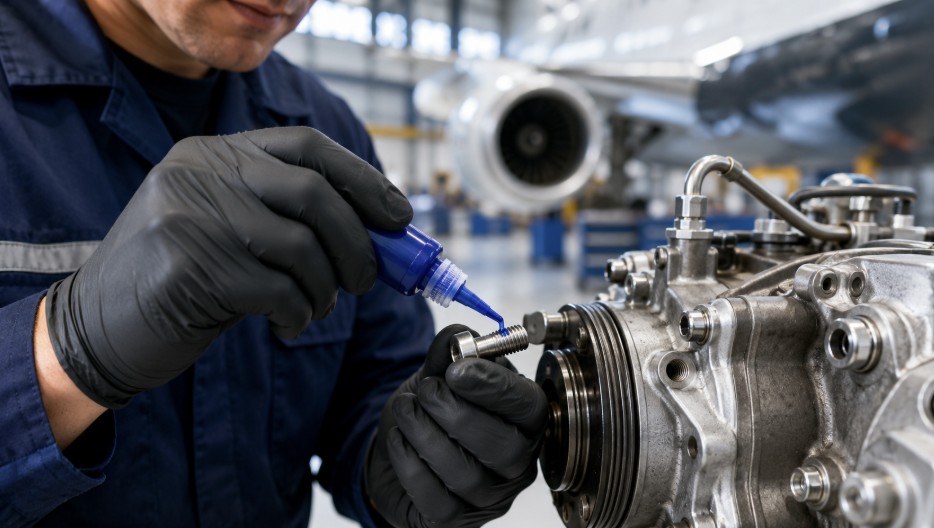
Aviation maintenance technician applying blue Loctite threadlocker to an engine fastener in an MRO hangar.

LOCTITE Threadlocker Chart

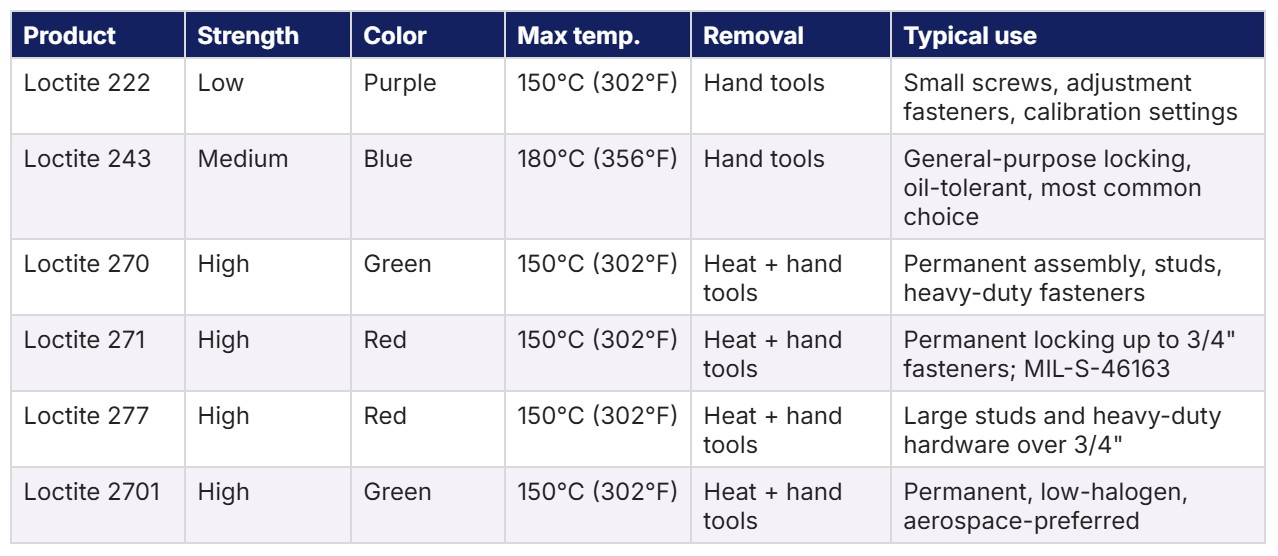
The table below summarises the threadlockers most frequently used in aviation maintenance. Strength, color, temperature resistance, and removal method are the key selection criteria.

Loctite threadlocker chart comparing products by strength, color, maximum temperature, removal tools, and application use

Temperature figures are typical service maxima and vary by product and pack size. Always confirm the exact product and grade meet the specification required by your maintenance documentation before ordering.

What Is a Threadlocker?

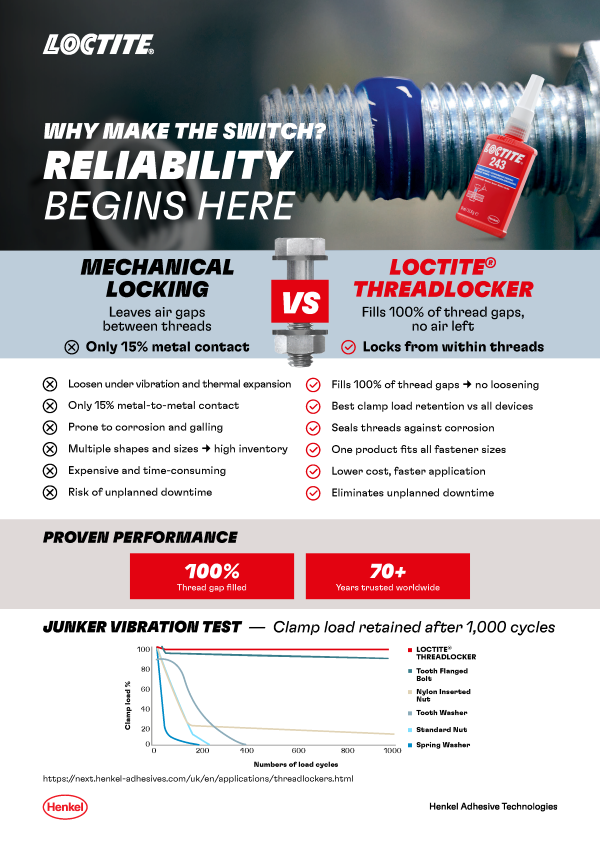
A threadlocker is a single-component anaerobic adhesive applied to the threads of a fastener before assembly. It stays liquid in contact with air, then cures to a hard thermoset polymer once confined between metal threads and starved of oxygen. Contact with active metal speeds the cure.

Once cured, the adhesive fills the gaps between mating threads. This locks the fastener against vibration and seals the thread against moisture and corrosion. Unlike a lock washer or castellated nut, a threadlocker secures the entire engaged thread rather than a single point.

Threadlocker vs. retaining compound: The two are often confused. Threadlockers secure threaded assemblies. Retaining compounds bond smooth, non-threaded cylindrical parts such as bearings, bushes, and shafts. If your task involves a slip or press fit rather than a thread, see the LOCTITE retaining compounds guide instead.

What Do the Threadlocker Colors Mean?

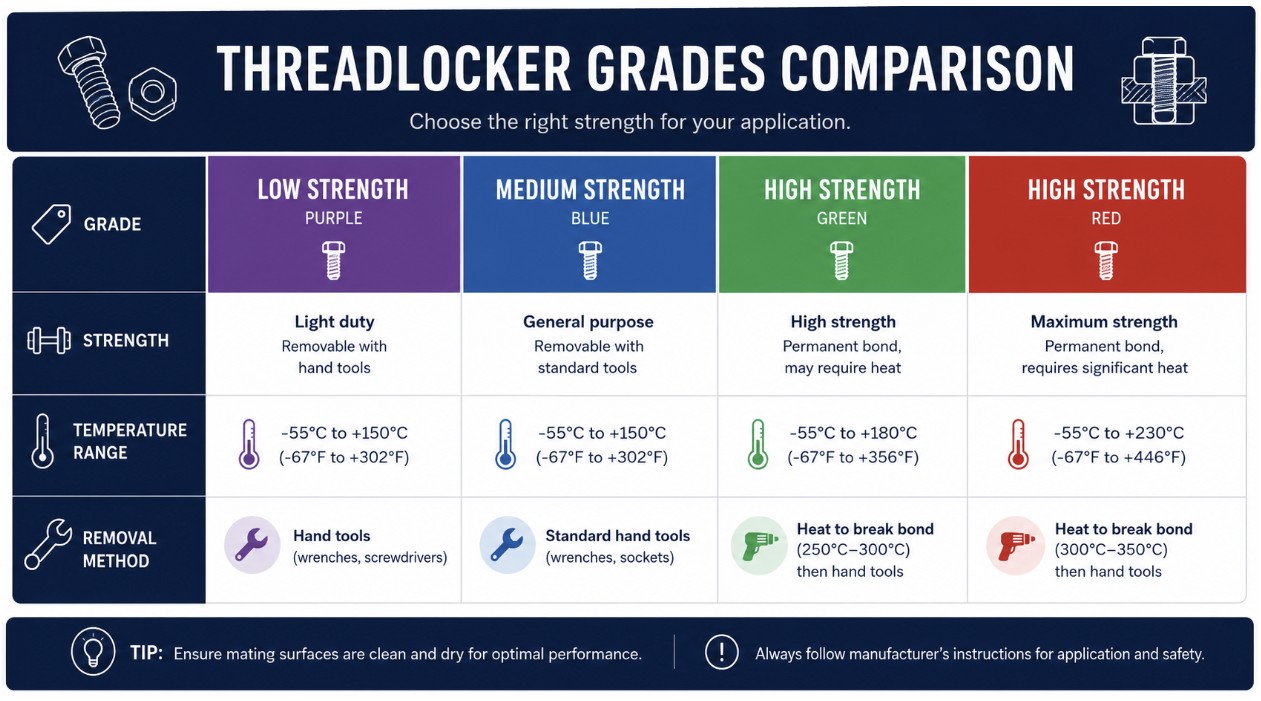
Loctite threadlocker colour and strength comparison chart showing purple, blue, green, and red grades.

LOCTITE threadlockers are color-coded so the grade can be identified at a glance. The color indicates strength, not chemistry:

  • Purple — low strength. For small or delicate fasteners that are removed regularly with hand tools (e.g. Loctite 222).
  • Blue — medium strength. The general-purpose choice; secure but removable with hand tools (e.g. Loctite 243).
  • Green — high strength, including wicking grades that penetrate pre-assembled threads (e.g. Loctite 270, 290).
  • Red — high strength, permanent. Usually needs localised heat to dismantle (e.g. Loctite 271, 277).

Which is stronger, red or green? Both are high strength. In practice they are comparable; the choice depends on the specific product and application rather than color alone. Always check the technical data sheet for the grade you intend to use.

When to Use a Threadlocker in Aviation Maintenance

Threadlockers are specified where fastener security is critical and vibration or thermal cycling is present. Common aviation and aerospace applications include:

  • Engine and accessory assemblies — high-vibration, high-temperature joints where mechanical locking alone is insufficient.
  • Landing gear and control linkages — fasteners subject to shock loading and repeated stress cycles.
  • Electrical and avionics fittings — terminal screws and connectors where loosening causes intermittent faults.
  • Hydraulic and fuel system fittings — where a secondary seal against leakage adds value.

Always follow the maintenance manual. Threadlocker selection in aviation is not a matter of preference. The applicable Aircraft Maintenance Manual (AMM), Component Maintenance Manual (CMM), or engineering drawing specifies the required product, grade, or specification for each fastener. On critical flight-control joints, positive mechanical locking such as safety wire may be required in addition to, or instead of, a threadlocker. Substituting a product without approval can void compliance and compromise safety.

Threadlocker Strengths Explained

Threadlockers are grouped by cured strength, which determines the break-loose torque and whether the joint can be dismantled again. This is the single most important selection decision.

Low strength

For small fasteners and adjustment screws removed regularly with hand tools. Low-strength grades prevent loosening without making disassembly difficult. Loctite 222 is the typical choice.

Medium strength

The general-purpose workhorse for most maintenance tasks. Medium-strength grades hold securely yet allow removal with standard hand tools. Loctite 243 is the most widely used and tolerates light oil contamination on the threads.

High strength

For permanent or semi-permanent assemblies, studs, and heavy-duty fasteners not intended for routine removal. Disassembly usually requires localised heat (around 250°C) as well as hand tools. Loctite 270, 271, 277, and 2701 sit in this group.

Loctite threadlockers strengths explained

Recommended Threadlockers for Aviation Applications

LOCTITE 243 — Medium Strength (Blue)

LOCTITE 243 is the most versatile threadlocker for general maintenance. It secures fasteners against vibration while allowing removal with hand tools, and it tolerates minor oil contamination, reducing the need for aggressive cleaning. For most medium-strength tasks where the manual does not call out a specific military specification, this is the default choice.

LOCTITE 270 — High Strength (Green)

LOCTITE 270 is a high-strength grade for permanent assemblies and fasteners that must not loosen under heavy vibration or shock. It is commonly compared with 243 when deciding between a removable and a permanent bond. Choose 270 when the joint is not intended for routine disassembly; choose 243 when serviceability matters.

LOCTITE 271 — High Strength (Red)

LOCTITE 271 is a high-strength permanent threadlocker suited to fasteners up to 3/4 inch. It is supplied to meet MIL-S-46163 Type I Grade K, making it a common specification match where military paperwork is required. Confirm the specific product and pack size carry the required certification before ordering.

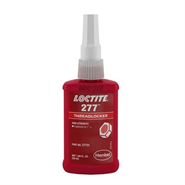
LOCTITE 277 — High Strength (Red)

LOCTITE 277 is a high-strength permanent grade for large studs and heavy-duty hardware over 3/4 inch. Like other reds, it typically requires localised heat to break the bond during disassembly.

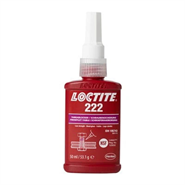
LOCTITE 222 — Low Strength (Purple)

LOCTITE 222 is the low-strength option for delicate fasteners, adjustment screws, and settings that need frequent access. It prevents loosening without over-securing small or soft fasteners that a stronger grade could damage.

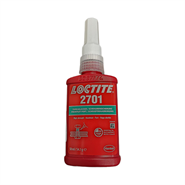
LOCTITE 2701 — High Strength, Low-Halogen (Green)

LOCTITE 2701 is a permanent high-strength threadlocker with low halogen content, often preferred in aerospace and electronics applications where halogen restrictions apply. It delivers 270-level performance with a cleaner chemistry profile.

For specialized requirements, the complete threadlocker category also includes MOD-specification LOCTITE grades, ThreeBond, Permabond, Bostik Born2Bond, and other brands to match particular approvals and pack sizes.

How to Apply a Threadlocker Correctly

Correct application matters as much as product choice. A cured joint is only as reliable as the surface preparation behind it.

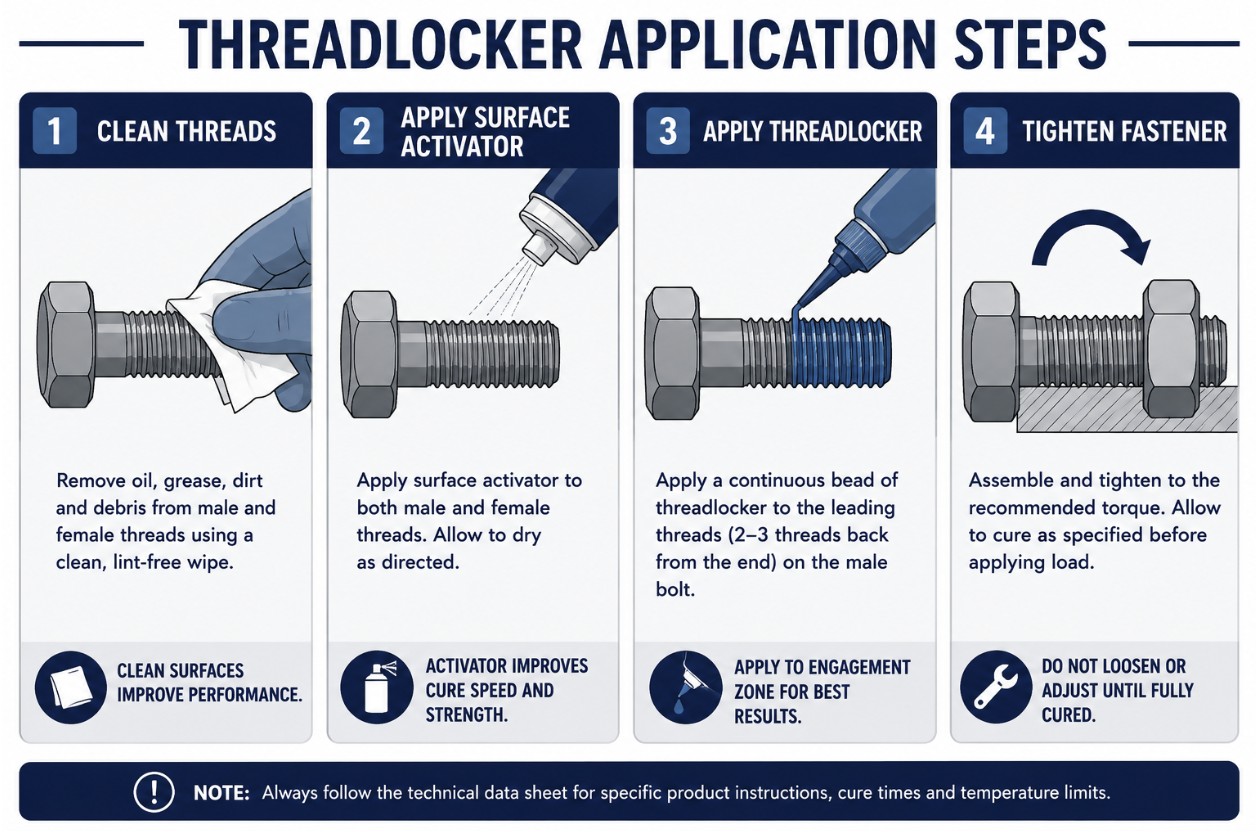
1. Clean the threads. Remove oil, grease, and debris. Contaminated threads reduce cure quality and holding strength.

2. Use an activator on inactive metals. Stainless steel, plated, or anodised surfaces cure slowly. A surface activator speeds and improves the cure.

3. Apply to the engagement zone. Place the adhesive on the threads that will be engaged, not just the tip of the fastener.

4. Tighten fastener and allow full cure. Handling strength develops in minutes; full cure typically takes up to 24 hours. Do not load the joint until cured.

Four-step diagram showing threadlocker application: clean threads, apply activator, apply adhesive, assemble fastener.

Threadlockers and Aviation Specifications

Many aviation fasteners require threadlockers that meet a defined military or OEM specification rather than a commercial grade. MIL-S-46163 is one of the most frequently cited standards for anaerobic threadlockers, covering type, grade, and performance requirements. Meeting a specification is not the same as OEM approval for a given aircraft or engine. Always verify against your AMM, CMM, or Qualified Products List before use. For background on how military performance specifications are structured, see How to Navigate MIL-PRF Specifications for Aerospace Materials in the Silmid Knowledge Centre.

Sourcing the Right Threadlocker

Threadlockers are a small consumable with an outsized impact on fastener reliability. Match the grade to the task, follow the maintenance manual, and confirm certification before you order.

Browse the full threadlockers range to source by strength, brand, or specification. For help identifying the correct product or arranging specific pack sizes, contact the Silmid technical team.

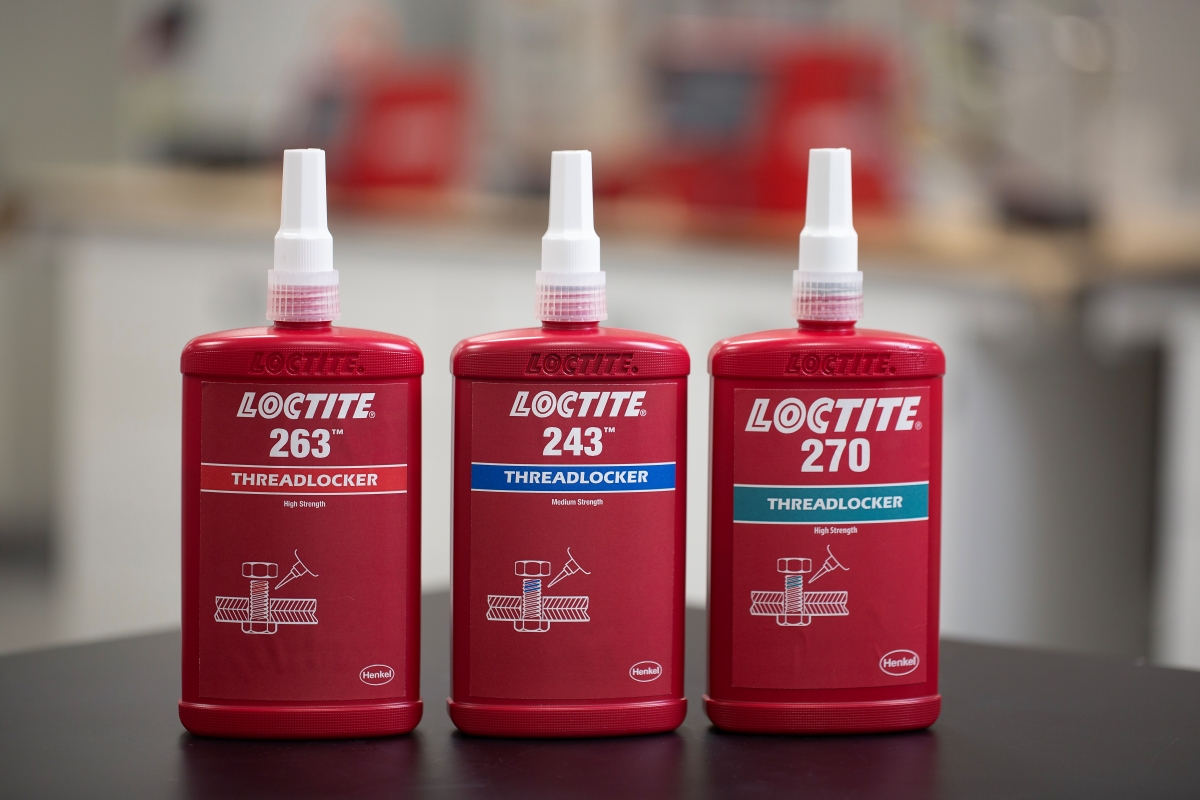
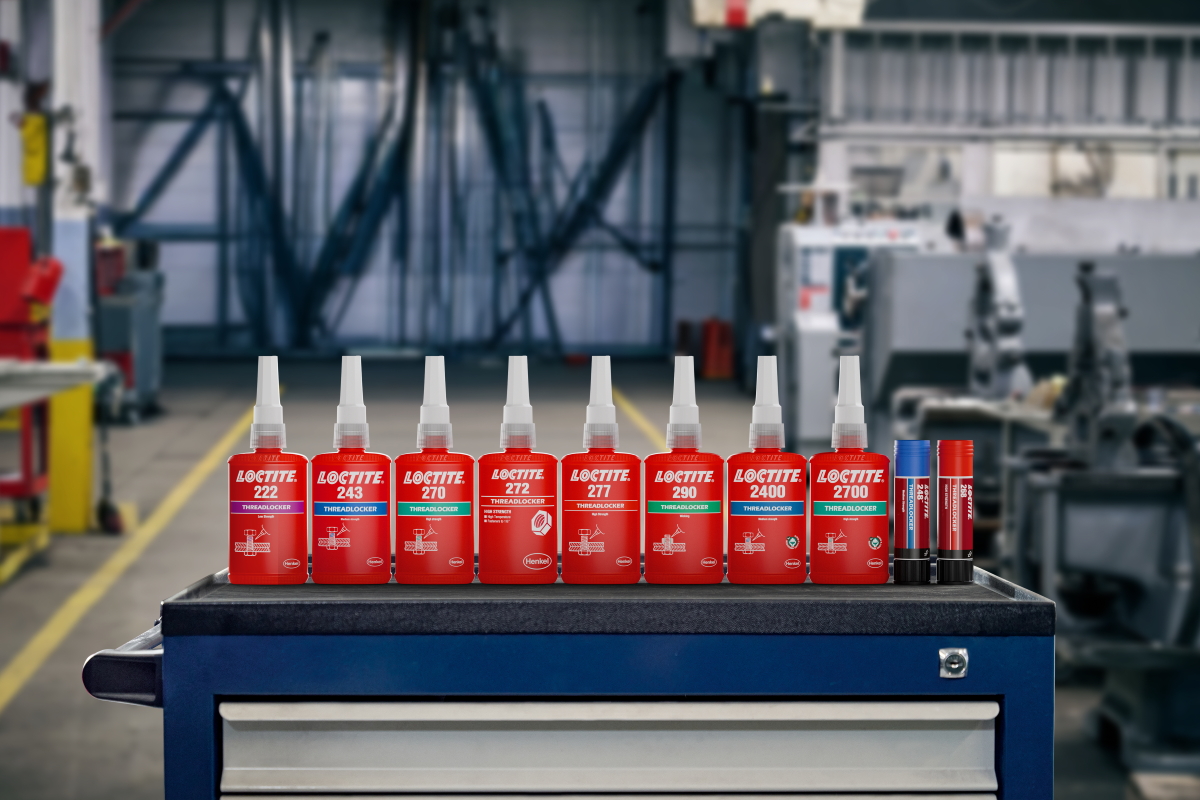
Loctite threadlockers product line packshot photo in a maintenance facility

Frequently Asked Questions

What are the different levels of LOCTITE threadlocker?

LOCTITE threadlockers come in three strength levels: low (purple, e.g. 222) for small fasteners removed often, medium (blue, e.g. 243) for general-purpose locking, and high (green or red, e.g. 270, 271, 277) for permanent assemblies that usually need heat to dismantle.

What do the different colors of LOCTITE threadlocker mean?

Color indicates strength. Purple is low strength, blue is medium strength, and green and red are high strength. The color lets technicians identify the grade quickly, but you should always confirm the exact product against the technical data and your maintenance documentation.

Which is stronger, red or green LOCTITE?

Both red and green are high-strength threadlockers and are broadly comparable. Neither color is universally stronger; the difference lies in the specific product, viscosity, and application. Green grades often include wicking types for pre-assembled threads, while reds such as 271 and 277 are permanent locking grades.

What is the difference between LOCTITE 243 and 270?

LOCTITE 243 is medium strength and can be removed with hand tools, suiting serviceable joints. LOCTITE 270 is high strength for permanent assemblies and usually requires localised heat to dismantle. Choose 243 for removable fasteners and 270 where the joint should not come apart in normal service.

Which threadlocker meets MIL-S-46163?

LOCTITE 271 is commonly supplied to meet MIL-S-46163 Type I Grade K. Because certification can vary by product and pack size, always confirm the specific item carries the required specification paperwork before ordering, and verify OEM approval against your maintenance documentation.